Latency is Money: Why Node Placement Matters More Than Encryption
We need to talk about speed. In the global network acceleration industry, everyone boasts about AES-256 encryption. But let's be honest: military-grade encryption is table stakes today. It is the absolute minimum standard. What isn't standard is how fast your data travels after it has been encrypted.
For high-frequency trading firms, e-commerce backends, or real-time gaming architectures, a 50-millisecond delay is the difference between profit and loss. Traditional VPNs route traffic through centralized chokepoints, completely ignoring the realities of BGP routing inefficiencies in Southeast Asia.
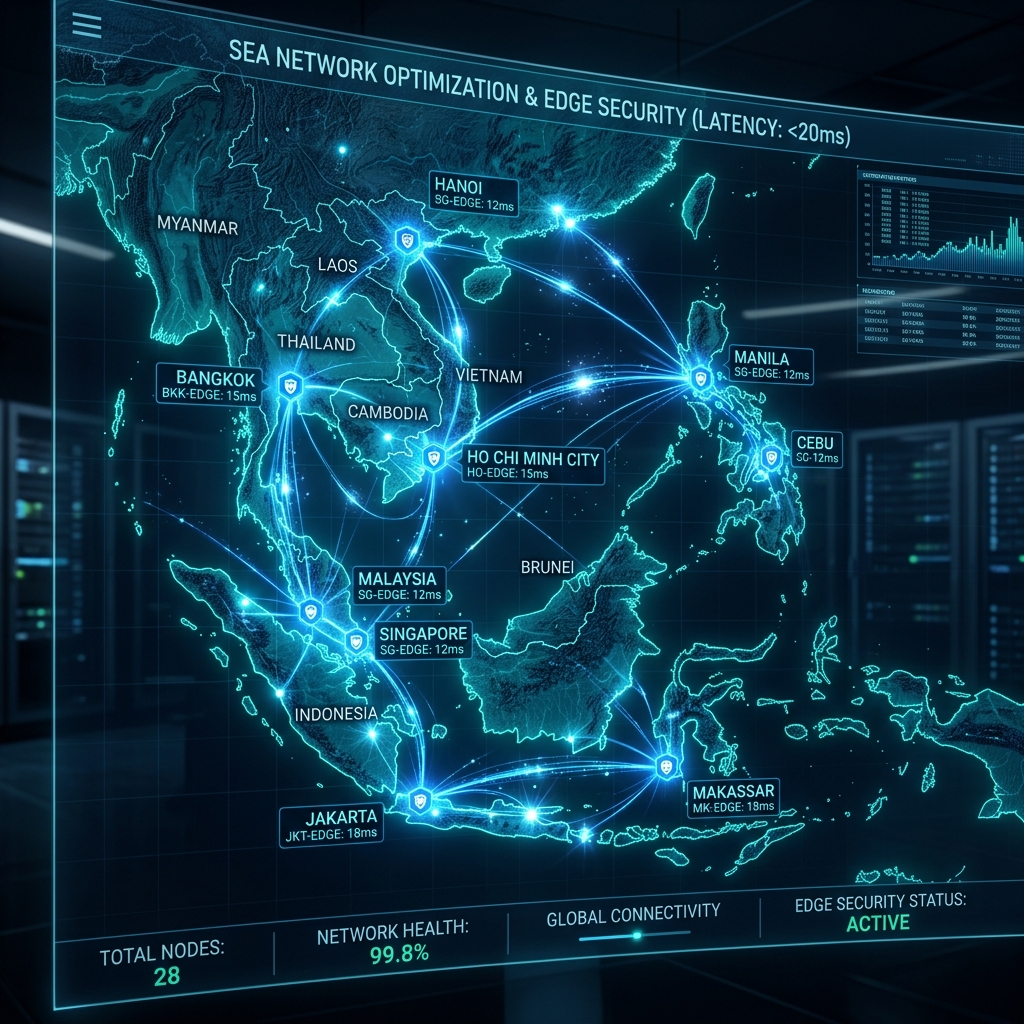
The Edge Security Paradigm
To combat this, we have completely re-engineered our network topology. Instead of relying on massive, centralized servers in single locations, we deploy hundreds of micro-nodes at the network edge, physically closer to the end-users. This drastically reduces the 'last mile' latency that plagues standard enterprise connections.
By combining smart, AI-driven routing algorithms with localized node placement, we bypass congested international data gateways. We monitor packet loss and jitter in real-time, dynamically switching tunnels before the user even notices a dip in connection quality.
The result? A secure tunnel that actually improves connection stability and speed, rather than hindering it. In 2026, a network accelerator should be a performance enhancer, not a bottleneck.

OVO CYBERTECH Team
Our team of expert engineers and security specialists is dedicated to providing the best-in-class digital solutions for businesses in Malaysia and beyond.
Sarah Jenkins
We saw a 40ms drop in latency just by switching to edge nodes. Incredible difference.
Reply